What Is Spaced Repetition? (And Why It Works for Language Learning)
Spaced repetition is the most effective way to remember vocabulary long-term. Learn how it works, why it beats cramming, and how to use it daily.
You learn a new word today. You recognize it tomorrow. A week later, it's gone.
That is not a motivation problem. It is usually a timing problem.
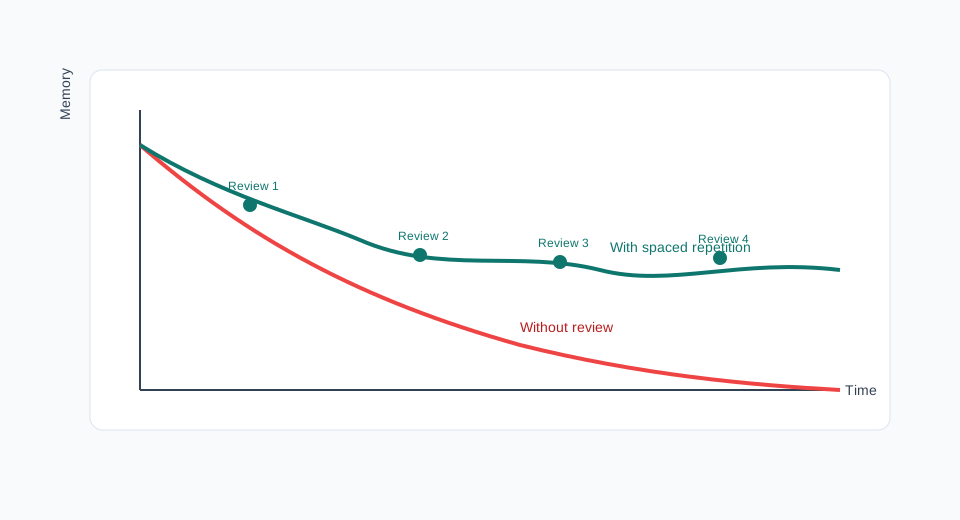
Your brain is built to forget information that feels unimportant. Spaced repetition changes that by showing words again right before you are likely to forget them. Instead of fighting memory, you work with it.
If you want vocabulary to stick for months (not just days), spaced repetition is one of the most reliable systems you can use.
What is spaced repetition?
Spaced repetition is a study method where reviews happen at increasing intervals over time.
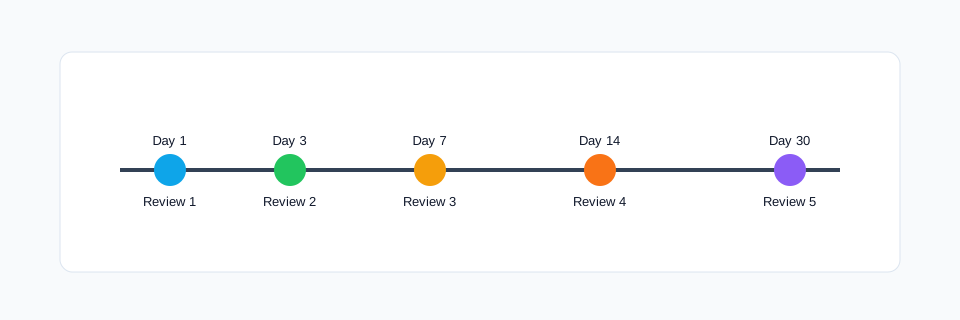
A typical sequence looks like this:
- Learn a word today.
- Review it tomorrow.
- Review it again in 3 days.
- Then in 7 days.
- Then in 14+ days.
When you recall the word correctly, the next gap gets longer. If you miss it, the gap shrinks and you see it sooner.
This keeps review efficient: hard words return frequently, easy words fade into the background.
Why spaced repetition works
1. It matches the forgetting curve
Memory naturally drops fast after first exposure. Timed reviews interrupt that decline and reinforce the pathway. Each successful recall makes the memory more durable.
2. It uses active recall, not passive recognition
Passive review feels productive, but it is often an illusion. Seeing casa = house is easier than retrieving casa from memory without help.
Spaced repetition forces retrieval. That retrieval effort is exactly what strengthens long-term memory.
3. It adapts to your weak points
Traditional study lists treat all words equally. Spaced repetition does not.
- Words you know well appear less.
- Words you miss appear sooner.
That adaptive loop is why learners can retain more with less total study time.
What intervals should you use?
Most systems follow the same basic logic:
| Review | Typical interval |
|---|---|
| 1 | 1 day |
| 2 | 3 days |
| 3 | 7 days |
| 4 | 14 days |
| 5 | 30 days |
| 6+ | 60+ days |
Exact intervals vary by app and algorithm. The core rule does not: correct answers push reviews farther apart; mistakes pull them closer.
Spaced repetition vs. cramming
Cramming helps short-term performance and long-term forgetting. Spaced repetition is the opposite.
| Method | Outcome after one month |
|---|---|
| Cramming | High forgetting, low recall |
| Rereading | Better recognition, weak recall |
| Random flashcards | Better than rereading, but inefficient |
| Spaced repetition | Strong recall with lower time cost |
The key difference is timing. You are not reviewing everything all the time; you are reviewing each item when it is most useful.
How to use spaced repetition for language learning
1. Start smaller than you think
Begin with 5 to 10 new words per day. This avoids building a review queue so large that you quit in week two.
2. Add vocabulary from real context
Words from conversations, podcasts, and reading material stick better than random lists. Personal context improves recall.
If you are building a speaking routine, this pairs well with How to Actually Start Speaking a New Language (Instead of Just Studying It).
3. Review daily, even briefly
Five focused minutes daily beats occasional long sessions. Spaced repetition needs rhythm more than intensity.
4. Use example sentences
Single-word translation cards are useful, but sentence cards are stronger because they teach usage and structure together.
5. Trust the schedule
Do not over-review words early out of anxiety. Let controlled forgetting happen, then retrieve. That is where durable memory forms.
How this fits inside Lingo Practice
Lingo Practice can support this loop end-to-end:
- Save words from lessons and conversations.
- Review with flashcards and repeated practice.
- Reuse vocabulary in guided speaking sessions.
If you want a deeper speaking workflow, this related guide helps: How to Practice Speaking Spanish Alone (5 Methods That Actually Work).
You can also compare plans on our Pricing page to pick a daily practice setup that fits your schedule.
Common mistakes to avoid
Adding too many words too quickly
Big day-one decks feel exciting but usually collapse under review load.
Treating vocabulary as the whole language
Spaced repetition is excellent for recall, but fluency also needs listening, grammar, and speaking.
Stopping during the week-2 review spike
A temporary review surge is normal as early cards return. Keep sessions short and consistent until the load stabilizes.
FAQ
How many reviews per day should I do?
A practical starting point is 20 to 30 reviews plus 5 to 10 new words.
What if I miss a few days?
Resume with overdue cards first. You may get a heavier session, but progress is not lost.
Can I use this for grammar too?
Yes. Sentence patterns, conjugations, and grammar reminders all work with the same spacing logic.
Final takeaway
Spaced repetition is not a hack. It is a reliable memory system built around how forgetting actually works.
Show up daily, keep your new-word count realistic, and let the schedule do its job. If you do that, your vocabulary will still be available when you need it in real conversation.
Practice this in Lingo Practice
Turn these ideas into daily speaking practice with AI corrections, smart vocabulary review, and progress tracking.
Also on App Store and Google Play.
Related reading
Explore the next article in this cluster to strengthen the main topic and keep building context.
Input vs Output: Why Studying a Language Isn't the Same as Speaking It
You can study a language for years and still freeze when it's time to talk. The reason is the input-output gap — and once you understand it, the fix is obvious.
Duolingo vs Babbel vs Lingo Practice — An Honest Comparison (2026)
Three popular language apps, three different bets. Here's a straight comparison of Duolingo, Babbel, and Lingo Practice on what they actually teach, what they cost, and which one fits adults who want to speak.
How to Practice Speaking French Alone (5 Methods That Actually Work)
You don't need a tutor or language partner to practice speaking French. Use these 5 practical solo methods to build speaking confidence daily.